Source High Precision Mini EDM Machines for Aviation, Metallurgy, Electrical
Compare 30 high precision mini edm machines from verified Chinese suppliers. Evaluate specifications like stroke, voltage, and control methods for aviation, metallurgy, and electrical applications. These units feature CNC capabilities, ISO CE certification, and customizable options to meet diverse industrial needs across multiple sectors.
Key considerations
Products List


Comprehensive Sourcing Guide
High Precision Mini EDM Machines Sourcing Guide
Buyers evaluating high precision mini EDM machines must first distinguish between general wire-cut models and specialized spark erosion units based on the specific machining requirements of their production lines. The observed market data indicates a clear segmentation where some listings describe compact wire EDM units with specific table dimensions, while others reference broader EDM categories including spark working processes for aviation and metallurgy applications. Understanding this distinction is critical before initiating any procurement inquiry, as the control systems and movement methods vary significantly between contour control wire machines and point-to-point spark erosion tools.
Procurement teams should also scrutinize the listed performance classifications, which range from economical to high-end CNC machine tools, to ensure alignment with budget and quality expectations. The available data shows a mix of closed-loop and open-loop control methods alongside varying axis configurations, suggesting that a single listing may not represent the full spectrum of capabilities available in the sector. Buyers must verify whether the specific model number, such as the DK-7720 or HQ series, matches the intended application of cutting metal or forming components, as the process usage definitions in the market data explicitly separate metal-cutting from metal-forming and non-conventional machining tasks.
Product Scope and Observed Listing Signals
When reviewing product listings, buyers should note the wide variance in observed price ranges and minimum order quantities, which often reflect differences in machine complexity and customization levels. The market data reveals price points spanning from low-cost entry units to high-value industrial systems, with minimum order quantities typically ranging from single items to small batches of twenty units. This variability suggests that buyers must carefully correlate the listed price with the specific technical specifications provided, such as the working table size of 490x380mm or the stroke dimensions of 250x200mm, to avoid overpaying for features that do not match their production needs.
Sourcing teams must also pay close attention to the packaging and dispatch details, as these factors directly impact logistics planning and total landed cost. The observed listings frequently mention standard export packing with wooden boxes or polywood materials, alongside dispatch ports like Shanghai, which are standard for suppliers originating from Jiangsu, China. However, the presence of multiple model numbers and varying standard codes, such as HQ400GMZ or 400320300, indicates that buyers should verify the exact physical dimensions and weight limits, such as the 200kg maximum workpiece weight, to ensure the machine fits within their facility constraints and shipping arrangements.
Technical Specifications to Verify
Buyers must rigorously verify the numerical control capabilities and axis configurations, as the market data presents conflicting information regarding the number of controlled axes and control methods. While some entries specify five-axis CNC control with closed-loop systems, others list NC systems with open-loop control and point-to-point movement methods, creating a potential confusion for buyers seeking high-precision contouring capabilities. It is essential to confirm whether the machine utilizes a closed-loop control system for the specific application, as this directly influences the accuracy and repeatability of the machining process, particularly for complex metal-cutting tasks in aviation or electrical sectors.
The physical dimensions and power requirements are equally critical factors that require immediate validation against the buyer's facility infrastructure. The observed specifications include a machine dimension of 1200x900x1300mm and voltage options of 220V/50Hz or 380V/50Hz, which must be compatible with the local power supply and available floor space. Additionally, the working table size and stroke limits define the maximum workpiece envelope, meaning buyers must ensure that the 490x380mm table and 250x200mm stroke are sufficient for their intended parts, while also confirming the condition of the machine as new to avoid purchasing refurbished units without clear disclosure.
Compliance and Safety Documentation
Procurement teams must demand clear evidence of international certifications, as the market data lists ISO and CE marks but does not specify the exact compliance standards for every listed unit. Buyers should request the specific certification documents for the model they intend to purchase, ensuring that the machine meets the safety and environmental regulations of their destination country, particularly since the origin is listed as Jiangsu, China. The presence of an ISO certification is a positive indicator, but it is not a guarantee that every unit in a batch meets the same rigorous standards, so verification of the specific certificate number and scope is necessary before finalizing any order.
Safety documentation regarding the electrical and mechanical operation of the machine is another non-negotiable requirement for high-precision EDM equipment. Buyers should verify that the machine includes all necessary safety interlocks, emergency stop mechanisms, and operational manuals that comply with local industrial safety laws. The data mentions the machine is new and available for customization, which implies that safety features might be modified based on client requirements; therefore, the final configuration must be reviewed to ensure that any customizations do not compromise the inherent safety of the high-voltage spark working process or the moving mechanical parts.
Cost Drivers and Commercial Terms
The total cost of ownership for these machines is heavily influenced by the supply ability and the specific customization options requested by the buyer. The market data indicates a supply ability of 550 sets per month, which suggests a robust manufacturing capacity, but buyers must clarify if this volume applies to standard models or if custom configurations will incur longer lead times and higher unit costs. The availability of customization is a significant cost driver, as tailoring the machine for specific applications like aviation or metallurgy may require additional engineering time and specialized components that are not included in the base price.
Commercial terms regarding payment, shipping, and warranty must be explicitly defined to mitigate financial risk during the procurement process. The observed warranty period is listed as 12 months, which is a standard baseline, but buyers should negotiate terms that cover critical components like the control system and power supply units. Furthermore, the selling units are listed as single items, which allows for flexible purchasing, but the buyer must confirm the Incoterms and port of dispatch details to accurately calculate the final landed cost, including insurance and freight charges from Shanghai to their specific location.
Supplier Qualification and Quality Control
Evaluating the supplier's production location and quality control processes is essential for ensuring consistent machine performance and reliability. The data consistently points to Jiangsu, China, and specifically Suzhou, as the place of origin, a region known for its manufacturing ecosystem, but buyers should verify the specific factory's quality management systems beyond the generic ISO certification. It is advisable to request a factory audit or a detailed quality control plan that outlines how the supplier manages the production of the DK-7720 or HQ series models to ensure that the precision and condition of the machines meet the high standards required for metal-cutting applications.
Buyers should also assess the supplier's ability to provide after-sales support and technical training, as these factors are crucial for maintaining the long-term performance of high-precision equipment. The listing mentions a 12-month warranty, but the scope of this warranty, including whether it covers labor and travel costs for repairs, must be clearly defined. Additionally, the supplier's capacity to handle the packaging details, such as the use of polywood or plywood, should be verified to ensure that the machine arrives in perfect condition, as improper packaging can lead to damage during transit that voids the warranty and disrupts production schedules.
Long-Term Procurement Checks
Establishing a framework for long-term procurement checks involves setting up regular performance audits and maintenance schedules to ensure the machine continues to operate within specified tolerances. Buyers should implement a protocol for monitoring the machine's precision over time, given that the data lists the application as precision machining for sectors like aviation and electrical engineering. Regular calibration checks and the use of certified test pieces can help verify that the closed-loop control system and movement methods remain accurate, preventing costly scrap and ensuring consistent output quality throughout the machine's operational life.
Finally, buyers must plan for the eventual obsolescence of the machine and the availability of spare parts to minimize downtime in the future. The market data shows various model numbers and standards, which suggests that parts compatibility might vary between different production runs or model generations. Procurement teams should secure a supply agreement for critical spare parts, such as electrodes, control boards, and power supplies, before the initial warranty expires. This proactive approach ensures that the investment in the high-precision mini EDM machine remains viable and productive for years, protecting the buyer from unexpected disruptions in their metal-cutting or forming operations.
FAQs
What is the working table size for the Fangzheng mini wire EDM machine?
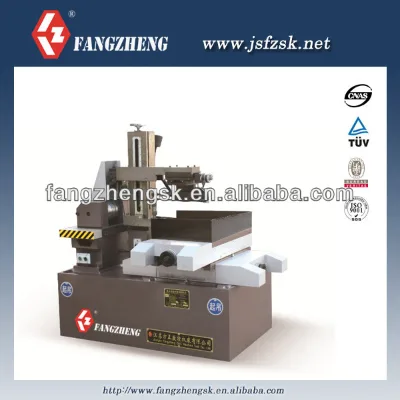
The working table size is 490x380mm. This dimension accommodates standard metal workpieces up to 200kg. The machine features a stroke of 250x200mm for X and Y axes. It is a CNC model designed for precise contour control in metal cutting applications.
Can the mini wire EDM machine be customized for specific needs?
Yes, customization is available for this mini wire EDM machine. Buyers can request specific adjustments to meet unique production requirements. The machine supports both CNC and MNC numerical control systems. It is classified as an economical tool suitable for various metal processing tasks.
What certifications does the high precision mini EDM machine hold?
The machine holds ISO and CE certifications. These confirm compliance with international safety and quality standards. The product is new and manufactured in Jiangsu, China. It is packaged in standard export wooden boxes for safe dispatch from Shanghai.
How much does the mini wire EDM machine cost?
The listed price range is 1 to 1,000,000 USD. This wide range reflects different configurations and options. The minimum order quantity is between 1 and 20 units. Buyers should contact suppliers for exact pricing based on their specific model requirements.
What is the supply ability for these mini wire EDM machines?
The supply ability is 550 sets per month. This capacity ensures timely delivery for bulk orders. The machine is a new condition unit with a 12-month warranty. It is suitable for aviation, metallurgy, and electrical industries requiring high precision.
Which voltage options are supported by the CNC EDM machine?
The machine supports 220V/50Hz and 380V/50Hz voltage options. This flexibility allows installation in various global electrical environments. It is a closed-loop control system for accurate movement. The device is ideal for metal cutting and forming processes.